
In Ireland, a quiet but steady shift is taking place in the wellness space. Once a niche term, functional mushrooms are becoming a part of mainstream conversation.
Among these, one mushroom stands out, and it goes by the name of lion’s mane. Those looking for a natural way to support long-term brain health and boost mental clarity and focus levels are finding this unusual-looking mushroom to be a game-changer.
Known in scientific terms as Hericium erinaceus, lion’s mane is quickly becoming a popular supplement among Irish supplement users, joining a broader European and global trend towards functional fungi. But what exactly is it, how does it work, and why should you be curious?
The case for nootropics
The growing popularity of lion’s mane in Ireland ties into a broader interest in nootropics – a class of substances known to boost brain performance. Nootropics can be synthetic (like caffeine or prescription stimulants) or natural, like specific herbs and fungi found in nature.
Lion’s mane falls into the second category of a natural nootropic. It secures this status thanks to its effects on memory, focus, and overall brain health. Studies and clinical trials are ongoing, with early findings deemed encouraging; however, eastern medicine has boasted about the benefits of lion’s mane for hundreds of years.
Scientifically supported benefits
Lion’s mane contains two primary bioactive compounds thought to drive its brain-boosting effects – hericenones and erinacines. These compounds work to stimulate the production of nerve growth factor (NGF) in the brain. NGF is a protein vital to the growth, maintenance, and regular repair of neurons.
Brain function & memory
A 2011 study published in Biomedical Research found that elderly participants with mild cognitive impairment who consumed lion’s mane powder daily for 16 weeks showed significant improvement in cognitive function compared to a placebo group. It was also proven that cognitive scores declined after supplementation stopped, suggesting the benefits of this mushroom are tied to consistent use.1
Neuroprotection
Lion’s mane’s ability to promote NGF in the brain may offer protective effects. In preclinical models, supplementation was linked to better neural regeneration plus protection against neurodegenerative diseases like Alzheimer’s and Parkinson’s.2
Stress & mental health
Some research indicates lion’s mane can also reduce symptoms of anxiety and depression. A small human trial published in Biomedical Research found participants who consumed Lion’s Mane-enriched cookies reported reduced feelings of irritation and anxiety over time.3
Lion’s mane who?
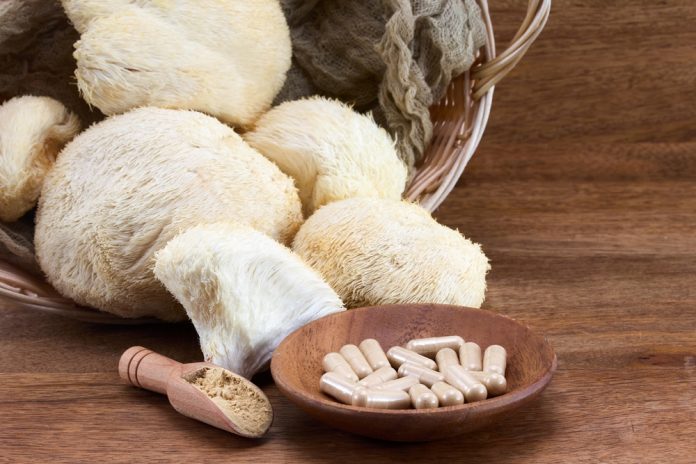
Lion’s mane is a unique-looking mushroom with dropping white tendrils that look like the mane of a male lion. Native to North America, Europe, and Asia, this mushroom has a long history of use in traditional Chinese medicine, particularly for neurological and digestive health.
While it can be cooked and eaten, lion’s mane is most commonly taken in supplement form, usually as a tincture (drops), powder, or capsule. Liquid formula drops from a tincture allow the user to make the most of its active compounds by dropping the extract under the tongue and allowing it to absorb through the gums.
Capsules and powders need to be digested to absorb them into the body, and they can contain unnecessary filler ingredients. It is best to do some research and check ingredient lists before investing in your first lion’s mane supplement.
Fit for Ireland’s wellness culture
In Ireland, where mental health and natural living are growing priorities, lion’s mane fits right into the desires of the modern public. Whether it’s a focus on work-life balance, improved mental health, or rising interest in non-pharmaceutical offerings, Irish consumers are increasingly looking for natural ways to support brain function.
The mushroom supplement market in Ireland was once mysterious and largely unknown, but today, in 2025, it’s experiencing strong growth. Irish wellness advocates, health food stores, and supplement brands have responded to the demand with a growing range of quality options.
Lion’s mane is now available from trusted Irish providers in liquid extract form, which is ideal for users seeking a convenient, high-absorption method of supplementation.
Who is lion’s mane for?
This fungi supplement is available for a wide range of people to try. For example, in Ireland, some of those turning to this powerhouse mushroom include:
- Students looking for natural brain support during study periods
- Professionals trying to maintain consistent focus and avoid mental fatigue
- Older adults interested in supporting memory and brain health
- Biohackers and wellness advocates looking to try adaptogens and nootropics
- Anyone who wants to manage stress without pharmaceuticals
Regulation in Ireland and the EU
Lion’s mane is legal and can be found in various forms across Ireland and the EU as a food supplement. Unlike psychoactive or ‘magic’ mushrooms, functional fungi like lion’s mane can be sold and consumed, provided they comply with food safety regulations.
In Ireland, lion’s mane supplements are classed as food supplements, which has helped the mushroom supplement space flourish.
Did you know?
- Lion’s mane is non-psychoactive: Despite being a mushroom, it has no mind-altering effects and is safe for daily use.
- The mushroom’s name in Japanese, Yamabushitake, references the hermit monks of the Shugendō tradition, who valued it for focus and meditation.
- Lion’s mane is known to contain anti-oxidants and supports immunity naturally.
- It grows on wounded or dead trees!
Our final thoughts
The rise of lion’s mane in Ireland reflects a broader shift toward natural, functional wellness.
As Irish people become more informed and proactive about brain health, memory, focus, and mood, lion’s mane mushroom has stepped into the spotlight, certainly not as a fad but as a research-backed supplement with deeply ancient roots and recent scientific support.
Its safety profile, scientific backing, and natural sourcing make it a solid option for anyone looking to explore what nature has to offer our minds.
References
- Mori, K., et al. (2011). Improving cognitive function with Lion’s Mane mushroom. Biomedical Research, 32(1), 67–72.
- Zhang, Z., et al. (2016). Erinacine A stimulates nerve growth factor synthesis. Int J Mol Sci, 17(6), 936.
- Nagano, M., et al. (2010). Reduction of depression and anxiety by Hericium erinaceus. Biomedical Research, 31(4), 231–237.